ROAR Thirdspace Residency

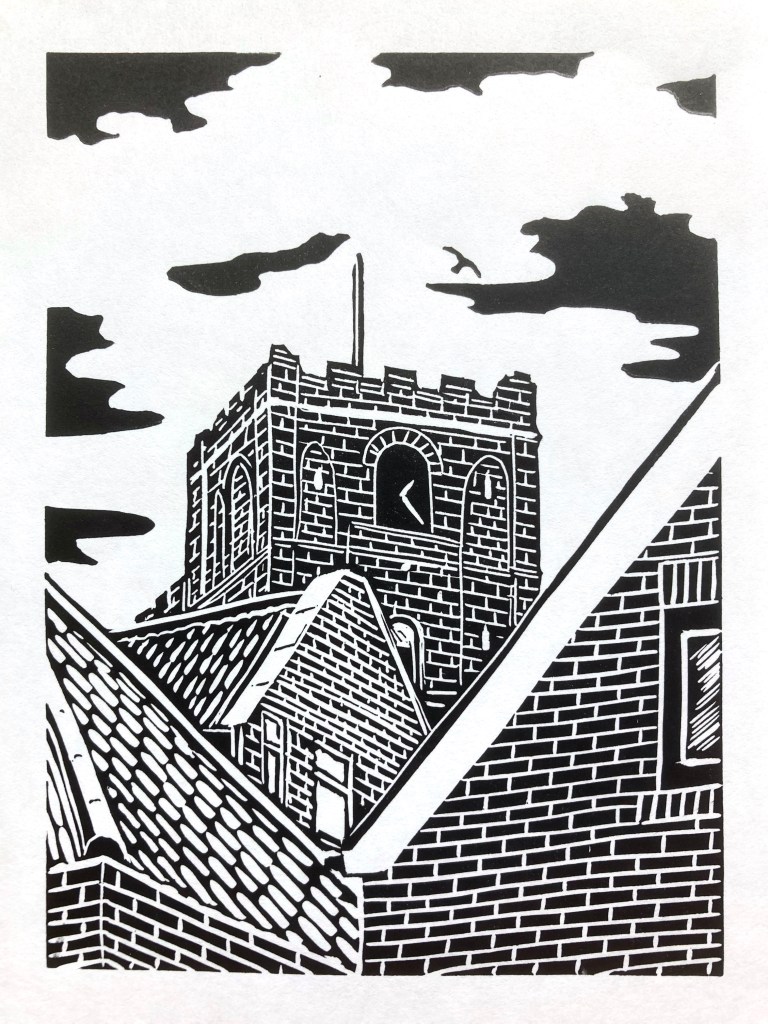
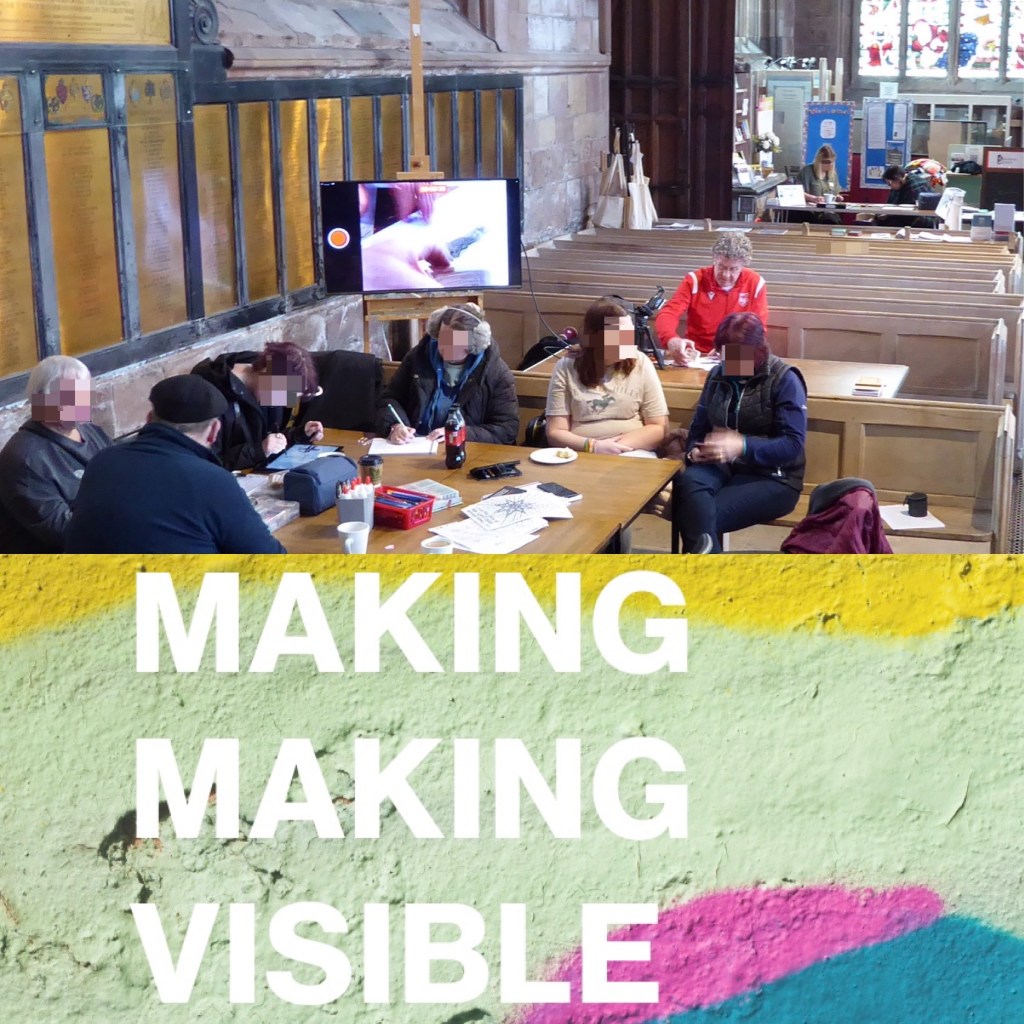
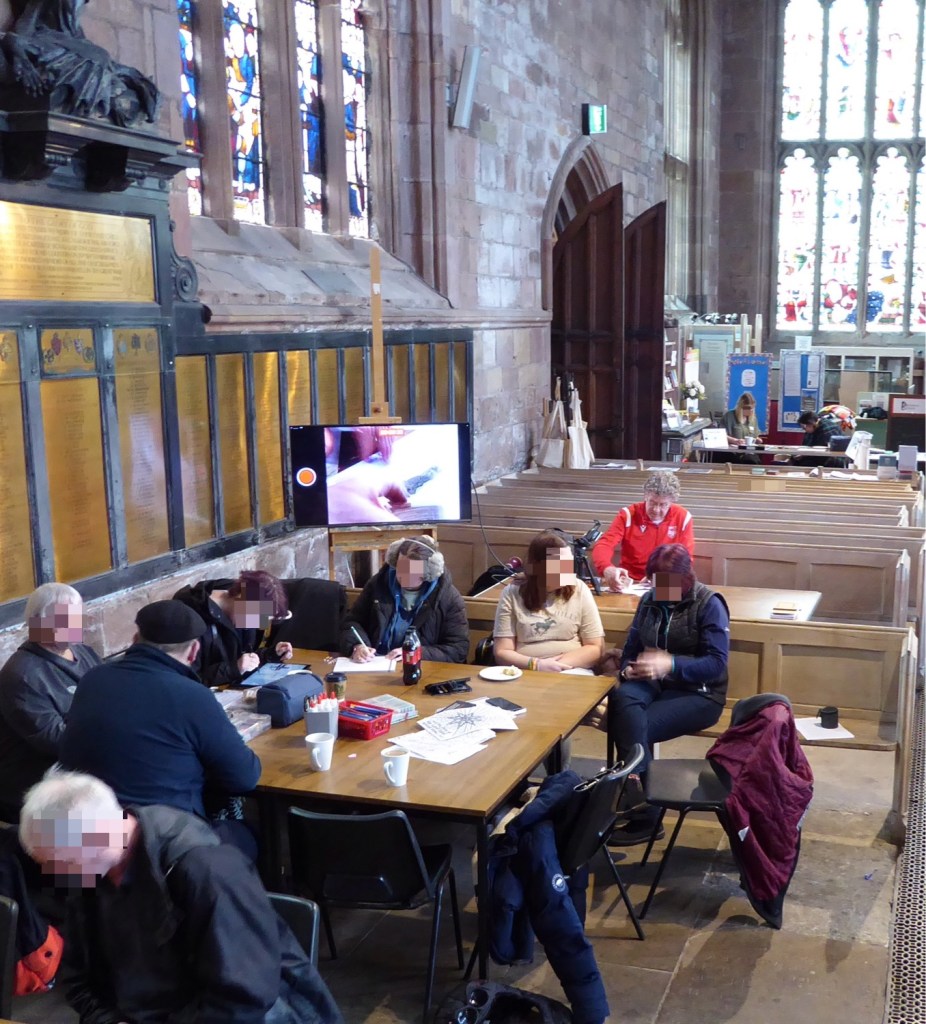
Having been given the opportunity by ROAR (Rotherham Open Arts Renaissance) for the past two months, I have been working at Rotherham Minster in the town centre as an ‘Artist in Residence’. This has been a fantastic chance for ‘Making Making Visible’ and showing people what an artist gets up to in their day to day work. Over the period, sadly now finished, I worked on one large Lino print of the Minster as well as having one day a week where I would take a small detail of the interior of the Minster, and draw, carve and print an image in one session. This was so that the visitors to the church would see how the basic printing process can work. Whilst carving or printing, I showed a live stream of my working on a big screen so that visitors could see in detail what I was doing. Often, they would come and sit by me and chat about what I was doing, or just pass a comment (always positive – thankfully!) or sometimes just come for a chat about themselves and their lives, growing up, what they are up to now or often, what they did before retiring.

I met some fantastic people, and had some fascinating conversations as well as getting a lot of work done – probably more than usual as there were fewer opportunities to take a break if I felt like it – being on show is a great encourager to make you ‘do’!

This was the final image, and Im happy with it.
The Isle of Lewis

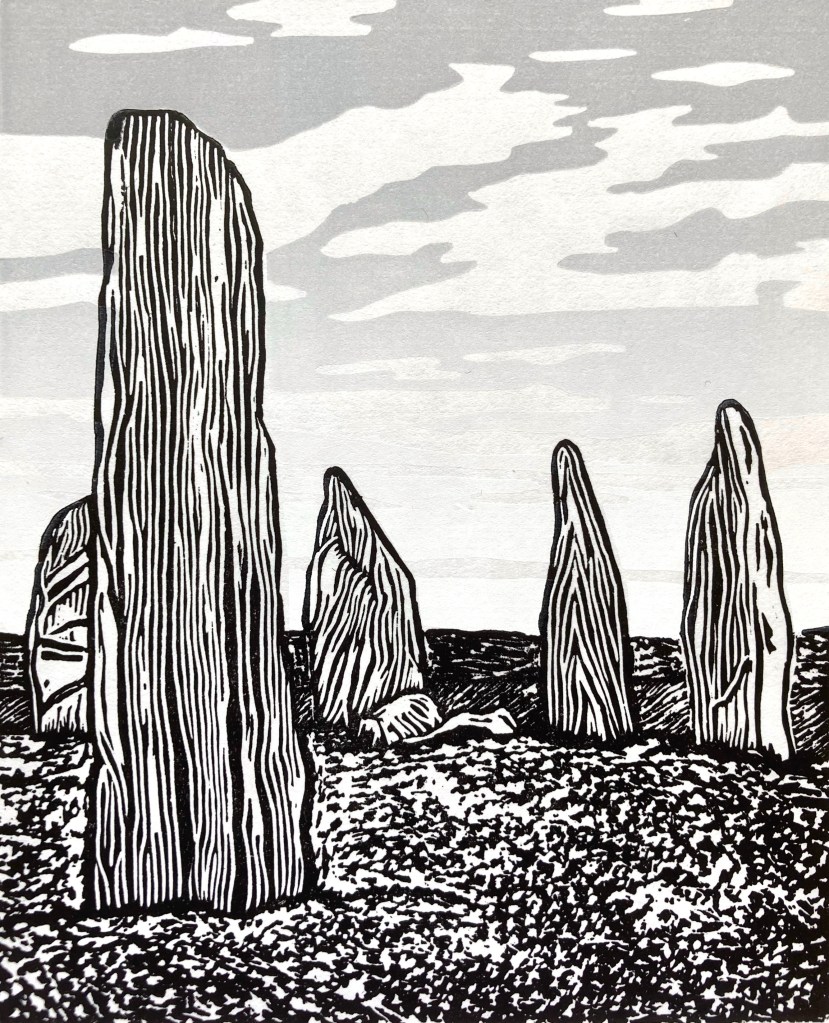
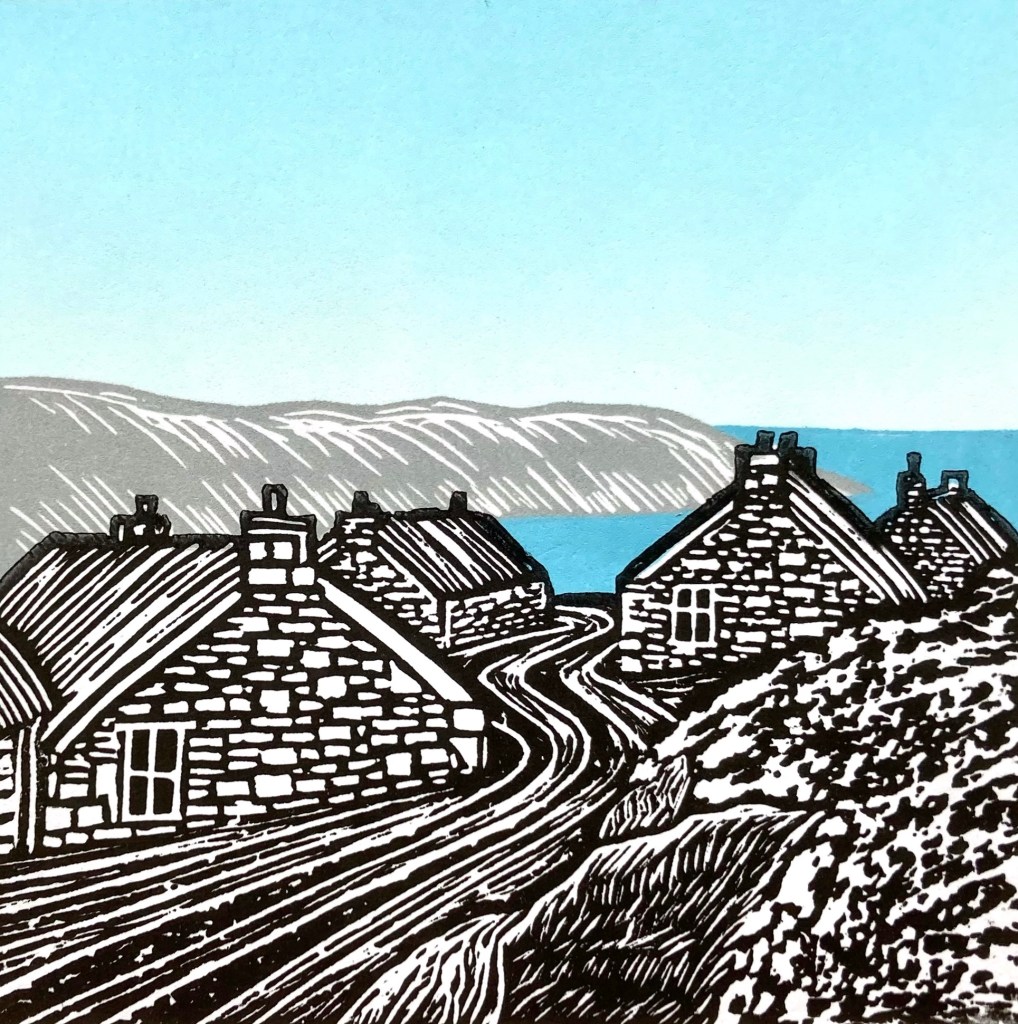
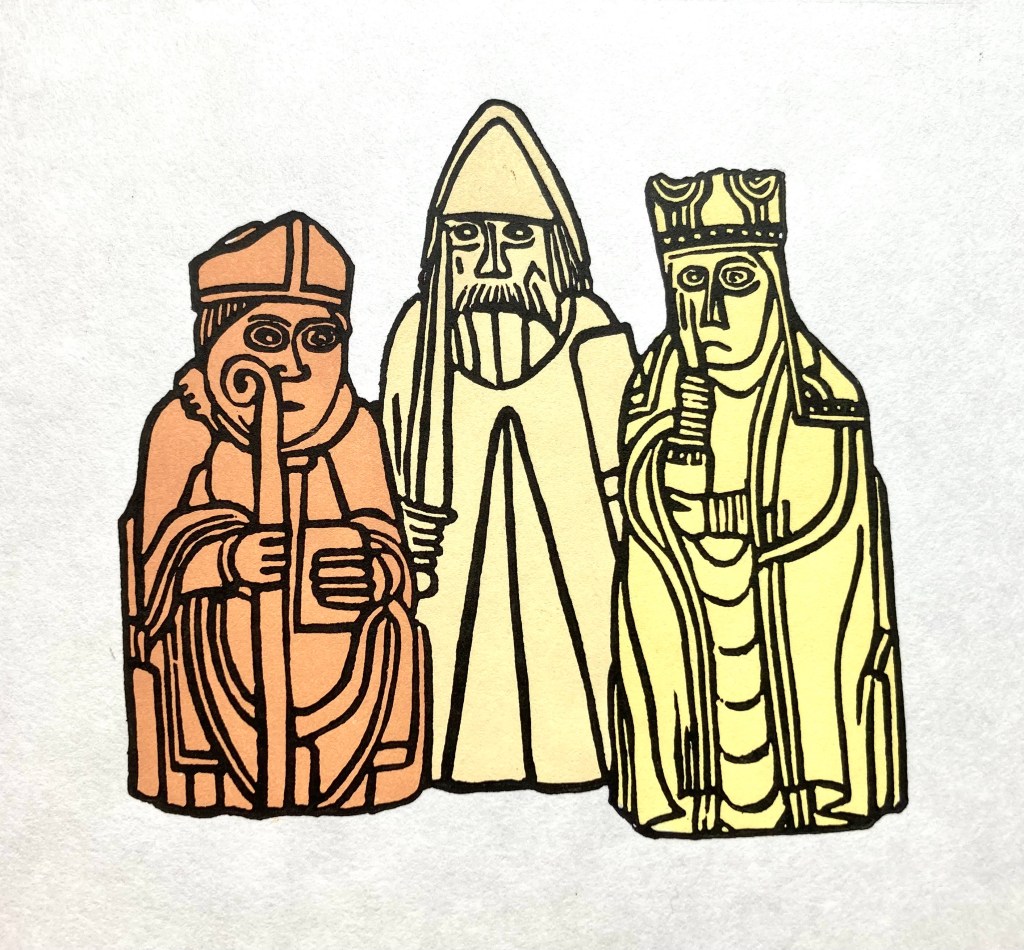
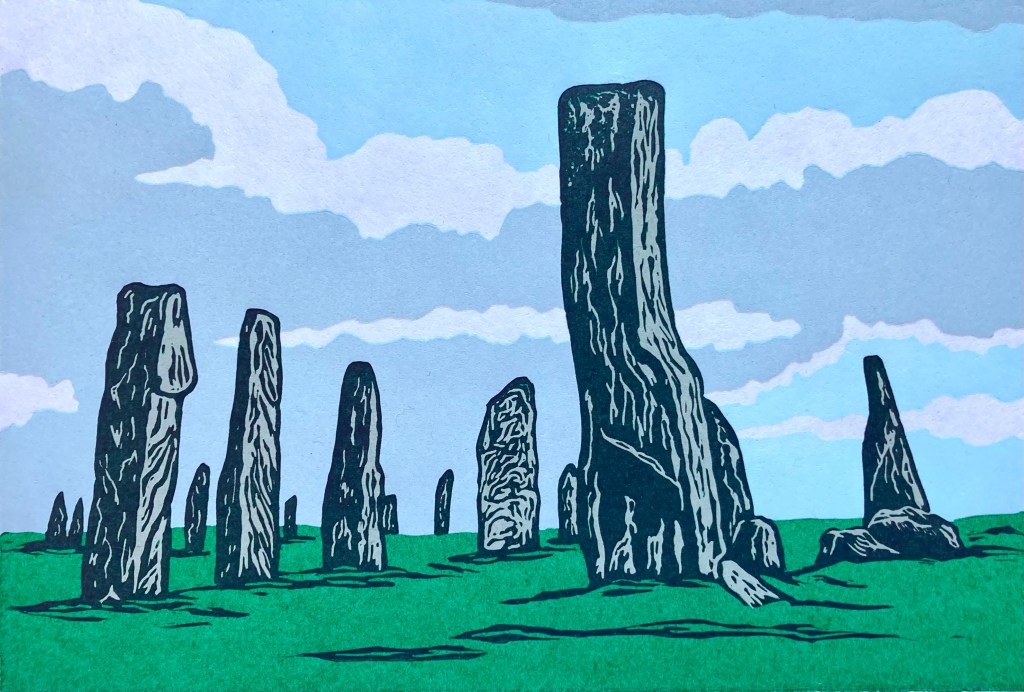
Well, it’s been an eventful few months and finally I’ve got around to updating this here website thing! Where to start? Back in December last year, we decided to spend the week before Christmas up in The Outer Hebrides on the Isle of Lewis. The standing stones at Callanish was one ancient site I have wanted to visit for donkey’s years and this seemed the perfect time to go – avoid the noise and crowds of the pre-Christmas shopping, and go to somewhere potentially deserted and quiet. It was both deserted and calm; no hustle and bustle, hardly anyone around, and access to all the places we wanted to see with absolutely no-one there. Callanish is a true, magical wonder and it was a joy to spend time there, just us and the wind, rain, hail, snow and glorious sunshine – all within about an hour and a half! The car park was like an ice rink, the visitor centre was shut (mercifully) and it genuinely was, just us. We also visited the Gearannan Blackhouse Village, again just us and although the actual houses were closed for the winter, we could walk amongst the buildings and get a real sense of place, as well as having the nearby beach to ourselves. We had a fabulous time up at the wonderful museum in Stornoway, where they have some of the original, so-called Lewis Chessmen, found on the island in 1831. They are beautifully carved pieces, all only about ten centimetres high but with expressions on their faces that show real characters.

Everything was so good, we made what some might call a rash decision to buy a house there. That was all done and dusted through January/February and we have now been up to our house twice and started to become locals (not sure that will ever truly happen, but it’s a state of mind). Anyway, the prints all came from photographs I took on that first visit. We didn’t actually see the Northern Lights this time but I used an old block from a previous image and it seemed to work.

Witches Dance

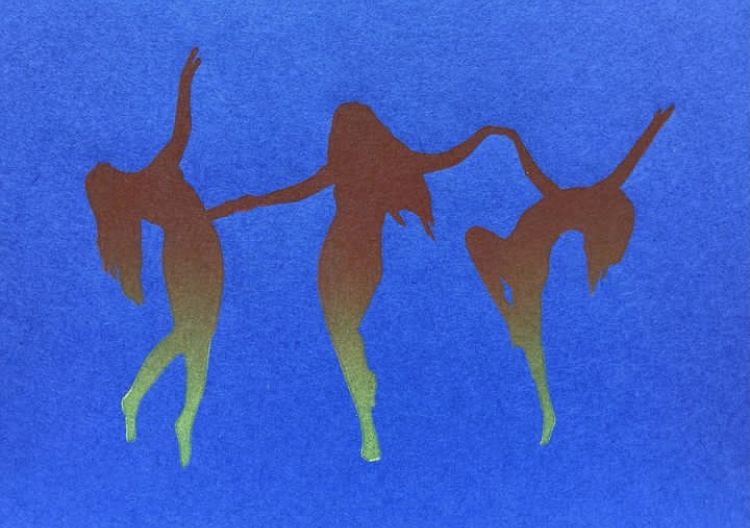
With a nod to Hallowe’en, this is an image adapted from a painting called ‘Nymphs Dancing to Pan’s Flute’ by Joseph Tomanek. I am always a little disturbed by the bad reputation witches get and wanted to show them more as free, nature-loving spirits than any kind of malevolent group. The only witches I’ve ever met and spoken to, were one Winter Solstice at Stonehenge when we were standing next to a group of ladies wearing purple and sky-blue robes, welcoming the sunrise like the rest of us. At one point, a little girl came up to one of the ladies and asked, “Mummy, what kind of witch are we?” The lady replied, “We’re traditional Pagan witches darling,” and watched happily as the little girl ran off to play with her friends.

View From Cadman Bridge

I have previously shown an image of Cadman Bridge in Sheffield, built sometime in the Victorian era. My family name is Cadman and I am descended from a long line of Sheffield’s so called ‘Little Masters’ – workers who often had their own little workshops dotted about the city, producing items using the steel for which Sheffield is rightly famous. My family were largely scissor makers. This scene interested me on a recent visit as we stood on the bridge and looked at the mix of old and new industries – the old brick work in the foreground and the new, gleaming concrete and steel of the factories in the background. There is a certain romance and beauty in the shapes and patterns created by these buildings. Perhaps it’s because that’s what I was brought up with.

Filey Beach

Last summer, we spent a week on the east coast of Yorkshire, England. For most of the time, the weather was warm and reasonably sunny (about as sunny as it gets on the east coast of Yorkshire!) but on one particular morning, the sea fret was so thick that we couldn’t actually see the shoreline from our position on the beach. It was warm, however, and our little boy was digging happily in the sand but there was a stillness rarely found on a beach at the height of summer. Every so often, figures would come out of the mist, walking towards us as they came back from the water’s edge. It was a moment I had to try and capture.

Magpie Mine – Derbyshire

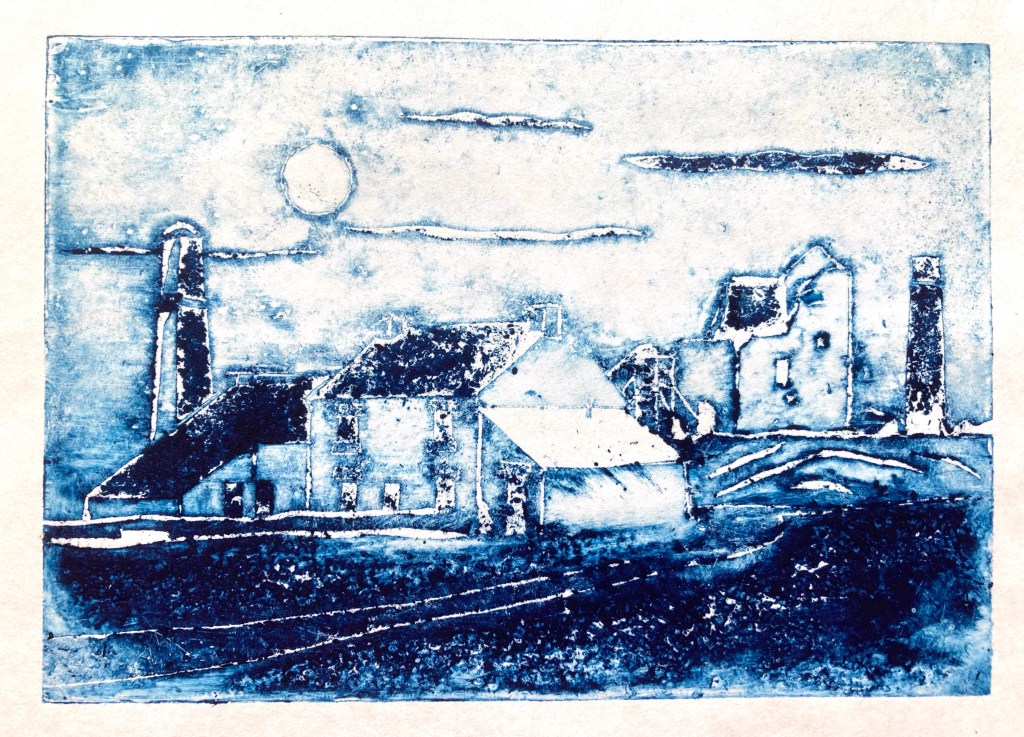
During a recent visit to Matlock Bath in Derbyshire, England, we went to the Mining Museum. I’m not usually a fan of museums, but there is something very personal and quite intimate about many of the items exhibited there. Amongst all the machinery on display, there are things such as old leather shoes and clay pipes found in the long-since deserted mine shafts. These items just feel like they have a story to tell and they look quite poignant in their glass cases. One of the displays tells the story of the events at the nearby Magpie Mine, where there were many disputes, one of which even ended with three miners being murdered down in the mine and a curse apparently being put upon the mine by the dead men’s relatives. We decided to visit the site, which is one of the best preserved lead mines in the country. There is certainly a slightly eerie atmosphere at the site, and it is that atmosphere that I tried to capture in my print. I decided to have a go at a collagraph print (as well as a lino print) to see if it would be better at conveying the correct ‘feeling’. Unfortunately, I don’t really know how to do a collagraph print, so, after watching a few videos on YouTube, I gave it a go. Whilst technically the images didn’t really ‘work’ as they do in the tutorials I watched, the two prints (seen below) did have an atmosphere that I was really happy with. The final image (top) was created by loading both prints into a drawing software programme on my iPad, before combining and tweaking them into one image I was happy with. Is that cheating? I don’t think so, though I will be struggling with it mentally for a few weeks yet! The lino print is still being made. All the time we were at the mine, and whilst I was making the image, I have had the song ‘The Mountain’ by Steve Earle going around in my head. The last verse in particular is appropriate:

There’s a hole in this mountain, it’s dark and it’s deep, And God only knows all the secrets it keeps. There’s a chill in the air only miners can feel, And there’s ghosts in the tunnels, the company sealed.

Figurehead

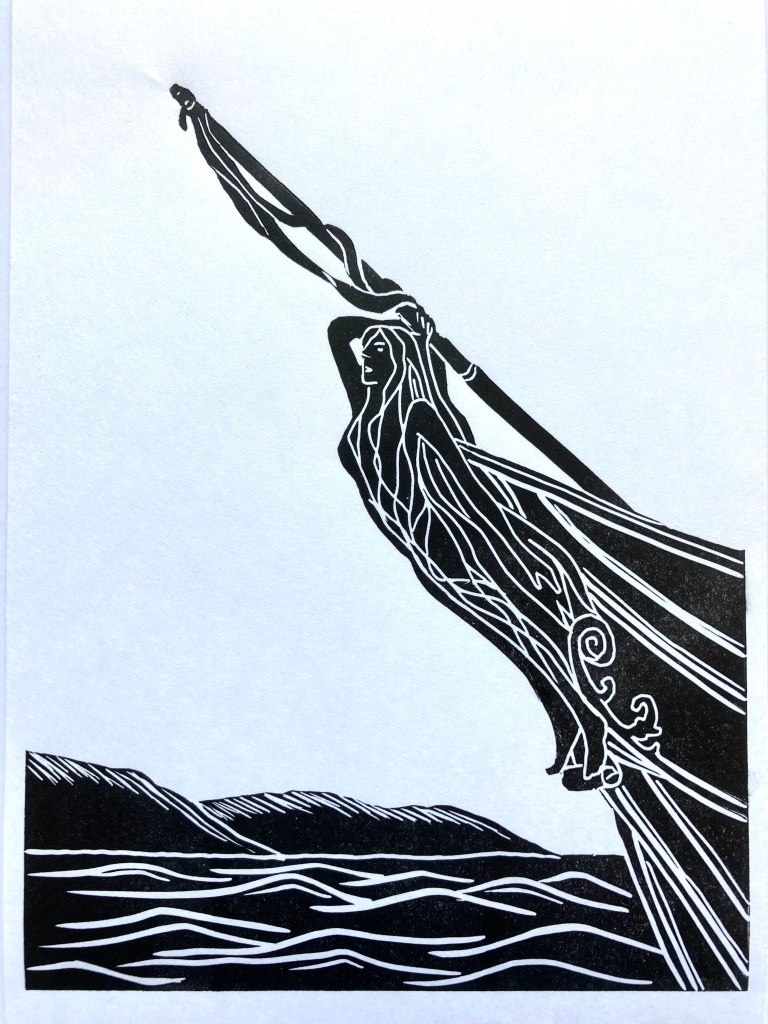
Despite being possibly the absolute epitome of a ‘landlubber’ (I feel seasick when I’m on a peddlo!) and being born and bred in as land-locked a place as you can imagine (Sheffield, England), there is something about the figureheads found on the front of old ships, that fascinates me. There seems to be a certain mythology associated with them, and apparently the ship’s crew used to take extremely good care of them, feeling that they embodied the spirit of a ship. The image that I came up with, actually started life as a figure that I ‘saw’ being made by the branches of an oak tree, that I knew I wanted to do something with. The recent visit to Whitby gave me the idea to do something more in keeping with maritime mythology than a woodland figure, and the position of the ‘figure’ in the tree lent itself to being placed as a ship’s figurehead. I wanted to keep it simple to keep me sane whilst planning and working on a multi-block, multi-colour print at the same time.

Whitby 2

Continuing on from the last post, I have recently completed two more prints inspired by my most recent visit to Whitby on the east coast of Yorkshire. The first (above) is the ‘classic’ view of the Abbey, seen from the road leading up to the site, and including the small expanse of water in front of it. My original photograph was taken in the early evening during March.

The second image (below) is of the feature known as ‘Black Nab’, seen from the beach at Saltwick Bay, just around the headland from the Abbey. There is a legend, known as ‘The Submerged Bells’, which tells of how, during the reformation instigated by Henry VIII, his men took the bells from the Abbey and put them aboard a ship harboured at Tate Hill Pier, ready to take to London. The local people begged them not to take the bells from such a Holy site, but to no avail. So it was that on a beautifully clear, warm Summer evening, the ship set sail on a perfectly still sea, only to sink without warning, straight to the bottom of the ocean as it neared Black nab. It is clear then, that the locals got their way, and the bells were never taken from the Holy site. It is said that if you sail close to the Nab, or listen on windy nights, the tolling of the submerged bells can be heard to this day. My image attempts to capture the essence of the legend.

Whitby

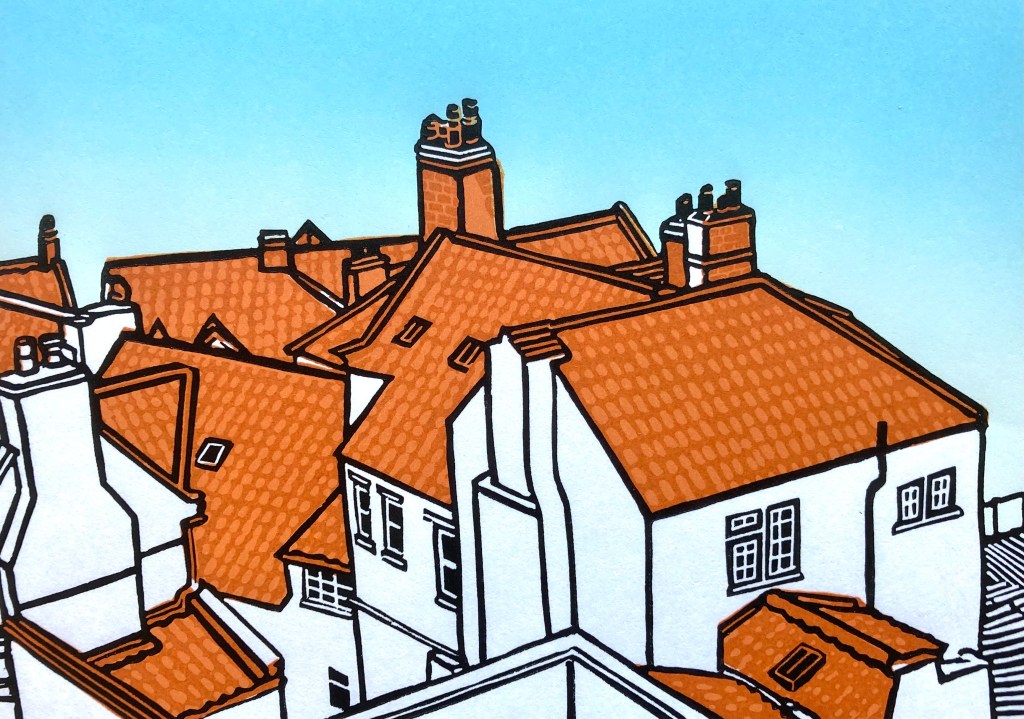
Over the years, I have taken children to Whitby many times and have always considered it to be a very special place, with a charm all its own. We have often tramped up and down (and sometimes up and down again!) the 199 Steps to the Abbey and St Mary’s Church. The image I will forever hold in my mind, is of the terracotta-coloured roof tiles on the higgledy-piggledy rooftops pictured here. I intentionally left out the harbour and the rest of the town that can be seen in the distance from this view point on the aforementioned steps. It is worth mentioning that at the top of the steps, in the graveyard of St Mary’s, is Caedmon’s Cross, a memorial to the so-called ‘Father of English Sacred Song’ and with Cadman being my surname, I’ve always had a certain affinity with the area.

This is a simple one colour print from a photograph that I took two weeks ago, standing on Tate Hill Pier, looking up towards St Mary’s Church.

CP Studio Exhibition

My most recent commission was working with a group of 6 other artists, providing pieces based around the vast collection of artefacts held by the Clifton Park Museum in Rotherham. ‘CP Studio’ was set up by artist Paul Evans, and features five ‘Cabinets of Curiosity’ – along the Iines of the so-called ‘cabinets’ (though they were often actually whole rooms) which generally housed “rarities and curious objects from natural history”, started around the 1500s and continuing in popularity until the early 1800s.

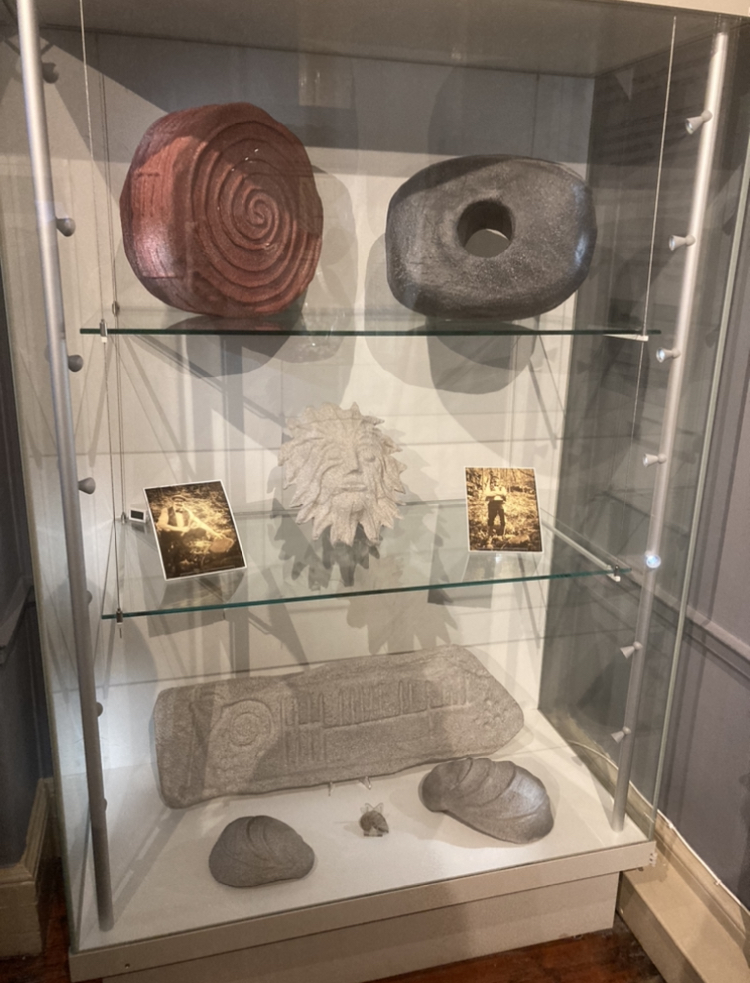
As a group, we visited the museum a few times and had a number of ‘Ideas Jams’ before going away to work on our interpretations of the theme. I played with the idea of scale and weight, producing the pieces seen above, based on fossils, Neolithic finds and a Green Man mask. All the pieces were made to look like stone using Modroc and stone-effect spray paint. A phrase used as the title of a film made by artist Neath Champion-Shorr was “False Narratives” and it was this that largely informed my work – trying to keep the viewer guessing about whether the objects were real or false. Two of the pieces give the game away (if you know how to read Oghams) with inscriptions actually stating ‘This is fake’. It was such a pleasure for me, not only to work with other artists for a change, but also to move completely away from printing for a while, and get back to sculpture.

The exhibition is housed in the Clifton Park Museum, Rotherham and runs until the middle of May.